

How To Aerate Golf Greens (Step-by-Step Guide For Beginners)
I took the reins of a long neglected par 3 golf course back in 2013. I knew how to cut grass, but that was about it.
The putting surfaces at this course were really bad (and by really bad, I mean the grass and weeds were knee-high).
Traffic on the course had all but died.
I knew that the greens couldn’t be salvaged, so I mowed everything down and applied a full treatment of Roundup. I waited a few weeks for the weeds to die, and then I planted bentgrass.
As you could imagine, this new growth was a dramatic improvement from what existed previously, but I still had alot to learn. I was now growing bentgrass, but I didn’t have the equipment to mow it or the wisdom to improve the putting surface of these greens.
I consulted some really helpful sources (thanks Mike Goatley, Fred Biggers, and Kurt Fellenstein). From these conversations, I learned two really important lessons:
- I needed to understand my soil conditions (and add nutrients accordingly).
- I needed to aerate the golf course greens in the spring and the fall.
Back then, Google didn’t have any great results for “how to aerate golf greens.”
It took me almost 3 years to learn the best practices for aerating a green on a tight budget, but once I did, our course boasted some of the best putting conditions in town.
This step-by-step aerating guide is for folks who find themselves in a similar situation.
So let’s get into it.
What You Need to Aerate Golf Greens
Step 1 – Aerate the Greens (Duh!)
Tools needed: Aerator with hollow tines
In many ways, this is the most important step. Golf course greens experience heavy foot traffic (everyone walks on them) and heavy equipment traffic (greens mowers are quite heavy).
Over time, that traffic leads to soil compaction which has to be relieved in order for your grass to thrive.
One of the more expensive pieces of equipment that you need access to is an aerator.
An aerator has tines attached to it. Tines are needle-like prongs that push into the ground and create holes that relieve soil compaction, remove thatch, and allow water/nutrients/air to reach the roots of the grass.

IMPORTANT NOTE
There are two types of tines: solid and hollow. When you aerate golf course greens, you want hollow tines. Hollow tines flip soil cores out of the ground and onto the green.
If you don’t own an aerator and purchasing one isn’t an option, rental companies usually have tow behind and walk behind aerators that you can rent. However, you must make sure they have hollow tines pre-installed.
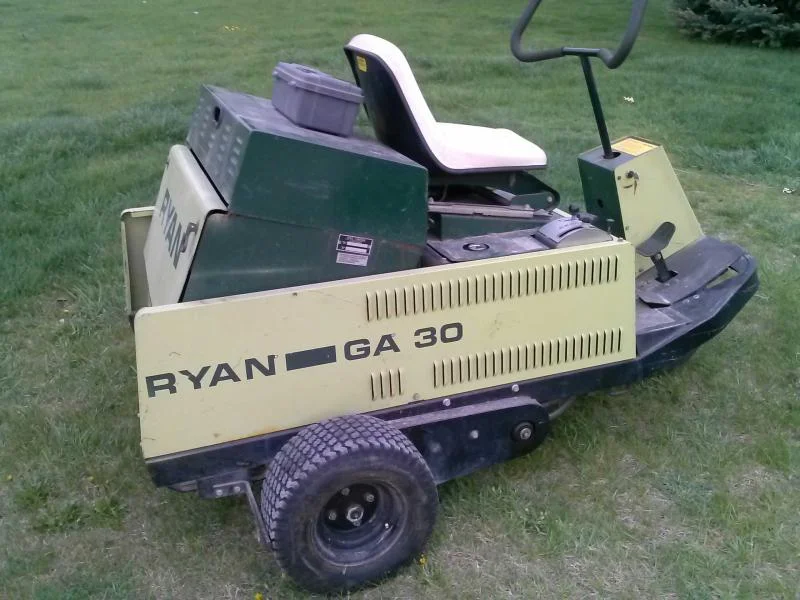
Other aerator options include:
Want to learn more about the different types of tines and their uses? This YouTube video will help.
Review of Step 1
Find an aerator, aerate your greens.
Step 2 – Remove the Cores
Tools Needed: Shovels, humans, leaf blower (optional)
When you’re done aerating with hollow tines, the greens will be covered with cores. These are the pieces of soil that the aerator “pulled” from the ground (they look like poop from a distance).
If you hear someone talk about “pulling cores,” they’re referring to the aerating you did in step 1.

Now you need to clean up those cores (unless you have a really fancy machine that cleans them up for you).
I prefer to shovel these courses into piles. From there, I transport those piles of soil and grass to other parts of the golf course where they can be spread out and used to replenish tee areas or dead spots.
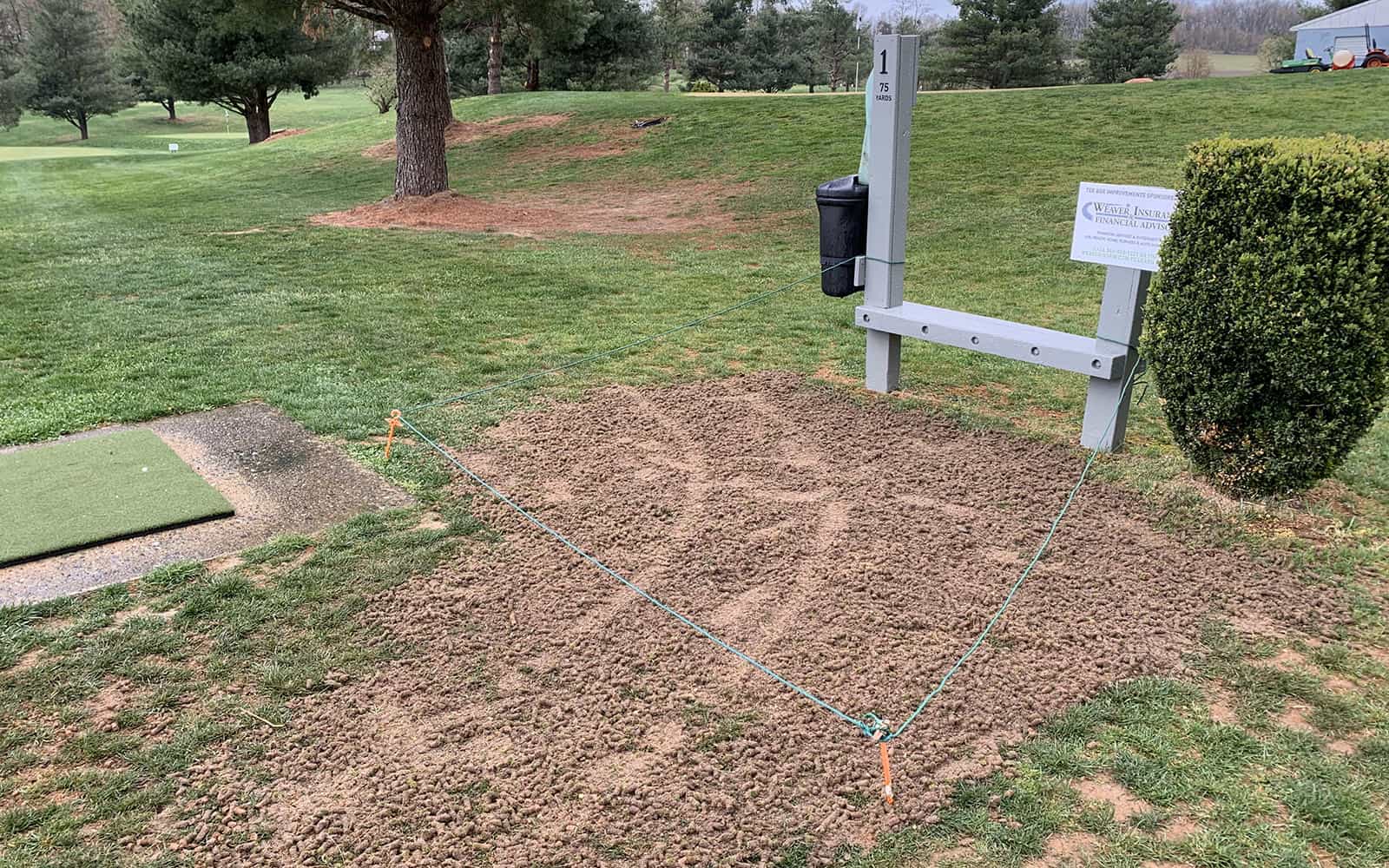
Some superintendents will leaf blow the cores into piles because it requires less physical labor and may speed up the process. The downside to this is that sometimes the cores break and create more of a mess.
Either way, your goal in this step is to get all the cores off of the green AND try to make the green as “clean” as possible.
Any dirt or rocks you leave behind will have an effect on your putting surface and potentially the blades of your greens mower as well.
Review of Step 2
Get all the cores off of the greens.
Step 3 – Add Nutrients and Seed
Tools Needed: A spreader, nutrients, grass seed (optional)
If you haven’t already, I would strongly advise you to get soil tests done on your greens. Find a turfgrass company in your area (someone that sells fertilizer or grass seed) to see if they can help.
My local turfgrass company came out to the course, performed soil tests, and then helped me develop a Nutrient Management Plan.
I know this step seems like a pain, but it’s worth it.
Applying the wrong fertilizers or amendments will hurt your grass.
Applying the right nutrients will set you up for a beautiful recovery.
Once you know what your greens need, fill up your spreader and apply the nutrients.
This is also a good time to reseed dead spots or just overseed the green for better coverage.
Review of Step 3
Apply the right nutrients and reseed if necessary.
Step 4 – Topdress the Greens
Tools Needed: A topdressing machine, sand
If aerating was the most important step, one could make the case this is the second most important step.
So what does it mean to topdress the greens?
In this step, you will add a layer of sand over the entire surface of the green (“dressing” the “top” of the green). This sand accomplishes a few things:
- Smoothes out the entire surface of the green (for the best possible putting conditions)
- Fills in the aerating holes
- Helps the greens drain better
- Covers the nutrients and seed you applied
How Much Sand Should I Apply?
Great question. If your greens haven’t been aerated in a long time, go heavier on the sand (approximately a 1/4″ to a 1/2″ of coverage). Your goal is to build a soil profile that is a good mix or soil and sand. This will result in better drainage and make it easier for the grass to develop deep roots.
Can I Use Any Type of Sand?
No. Find a supplier in your area with sand that meets USGA specifications. Check with top golf courses in your area to find out where they get their sand and what type of sand they use.
Topdressing is mostly easily accomplished using an expensive piece of equipment called a topdresser. A topdressing machine applies sand (or other organic materials) in a consistent layer.
These machines are a bit harder to find, but you can check with a local farmer, turfgrass company or another golf course to see if you can borrow or rent one. Used turf equipment sites sometimes have topdressers for sale.
I bought a really old topdressing machine called a metermatic from a golf course that no longer needed it. This machine gave me problems almost every year, but it got the job done (and is still running to this day).

If you were absolutely desperate, you could drop piles of sand on each green and try to spread it evenly, but this is a very labor intensive way to approach this step and it will undoubtedly result in an uneven application of the sand.
Review of Step 4
Use a topdresser to apply sand over the entire surface of the green.
Step 5 – Sweep the Sand
Tools Needed: Brooms, humans, coco fiber drag mat (optional)
If you operate the topdresser correctly, the machine will do a good job of spreading sand evenly…but there’s still work to do.
In your next step, you will use a broom to lightly smooth out the sand.
During my first sweeping session, I usually take the broom in a clockwise motion around the green, starting on the outside and then working my way to the middle of the green.
As you sweep, you’re trying to fill in the aerating holes and ensure that sand covers the green evenly.
IMPORTANT NOTE
Don’t apply too much pressure as you sweep. This could move around the nutrients you applied in Step 3.
Some greenskeepers will use a coco fiber drag mat to smooth out the sand instead of hand sweeping. These mats are more gentle on the grass than traditional metal drag mats.
Review of Step 5
Take a broom and gently sweep the sand on the green to fill aeration holes and create a smooth, uniform surface.
Step 6 – Water the Greens
The key to a speedy recovery is making sure the greens receive plenty of water.
You don’t want to overwater, but make sure the greens get a good morning watering (at bare minimum). You want to activate the nutrients you applied, allow new seed to germinate, and give the grass the water it needs to recover.

Step 7 – Sweep Again, Water Again
Once the sand is dry, you’ll want to sweep the greens again. This time I usually sweep across the greens in alternating lines (instead of a clockwise motion).
Again, the goal here is to make sure aeration holes are filled with sand and the putting surface is smooth.
Water again, and keep repeating this step for the next few days. Each time you sweep, go a different direction.
How Long Will It Take for My Greens to Recover?
Weather conditions play a part here for sure, but the greens should look much better in 2-3 weeks.
Proper sweeping and watering will speed up the recovery time, but outside temperatures and sunlight are factors that are out of your control.

When Do I Start Mowing?
If you’re like me, it’s going to be hard to resist mowing in the next few days.
However, sand and mowing reels don’t play nice together. If your reels are set at a low height (and they should be for cutting golf course greens), you want to wait as long as possible to do that first mowing (give it at least 1 week).
When you mow, the sand on the greens will quickly take that sharp edge off of your reels. If you can’t grind your own reels, that means you’ll need to pay someone to get them back in proper shape.
My advice is to mow when you can barely see the sand on the greens.
Questions/Comments
If you have questions about how to aerate golf greens, please leave them in the comments below.
